Compile data and simplify your lead generation
Fill up your unique online form to convert new visitors into leads. Implement webforms to improve lead scoring and nurturing on your website.

Build marketing systems that scale with revenue, accountability, and customer context in one CRM system.


Marketing is responsible for generating demand, qualifying interest, and supplying sales teams with context rich opportunities. It manages how prospects are identified, how engagement is tracked, and how readiness to buy is determined using customer data rather than assumptions.
Marketing also maintains continuity after conversion. It supports revenue growth through targeted cross sell and upsell programs, collects structured feedback to measure satisfaction, and runs re engagement programs to prevent churn. These activities rely on accurate customer history and behavior tracking.
When marketing operates inside the CRM, lead quality improves, handoffs become measurable, and campaign outcomes are tied directly to revenue and retention. This allows businesses to evaluate marketing performance based on contribution to pipeline, deal progression, and customer lifetime value rather than activity volume alone.
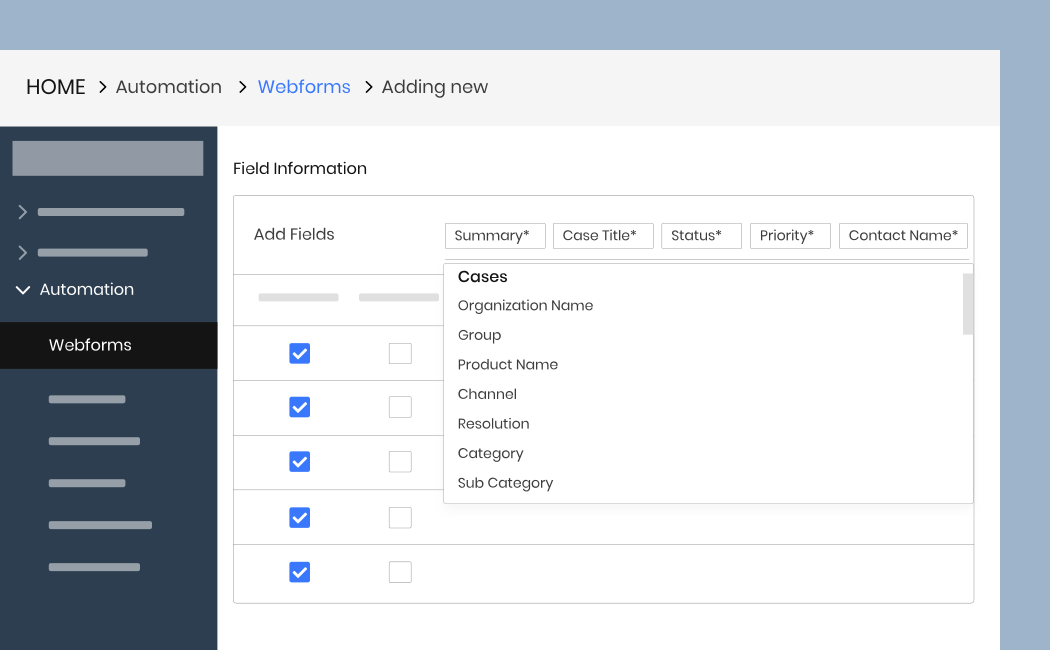
Fill up your unique online form to convert new visitors into leads. Implement webforms to improve lead scoring and nurturing on your website.
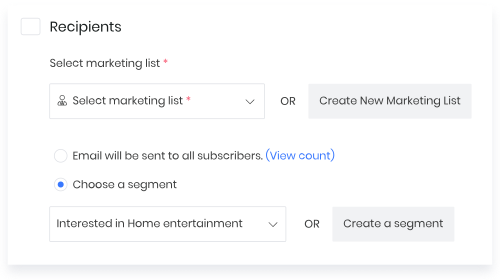
Compile marketing lists from subscribers and filter them with suitable parameters for segmentation. Tailored content will help you obtain more traction with your email marketing.
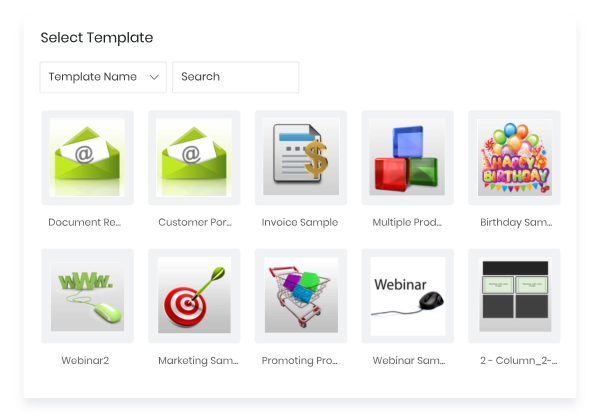
Target the right audience with personalized email templates. Send prompted consecutive emails to clients to engage them, and obtain email insights through analytics.
Send SMSes from Vtiger CRM to your potential and existing customers using pre-configured SMS extensions like TextAnywhere, SMS99, Solutions Infini, and many more to enhance your marketing efforts.
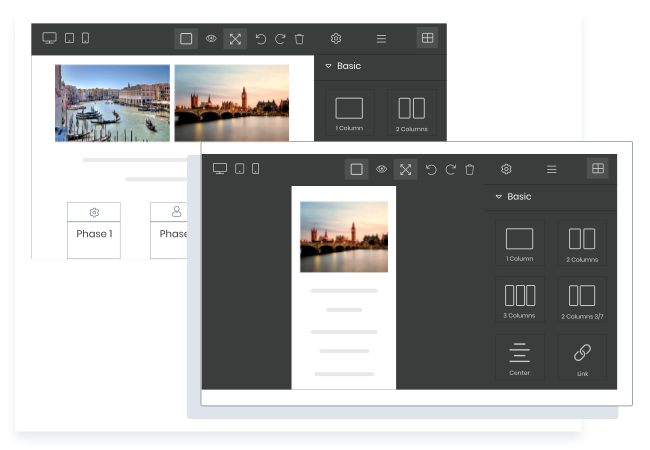
With a simple drag-and-drop action, you can easily create, edit, and publish specific responsive web pages using CTAs.
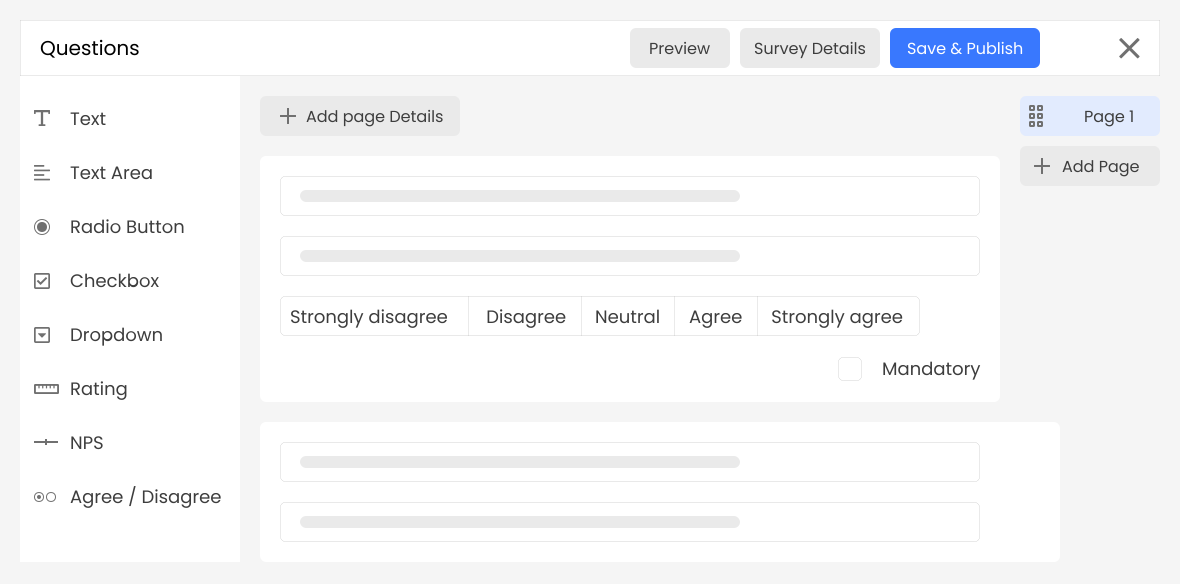
Create and distribute surveys to your customers and keep track of how they perform.
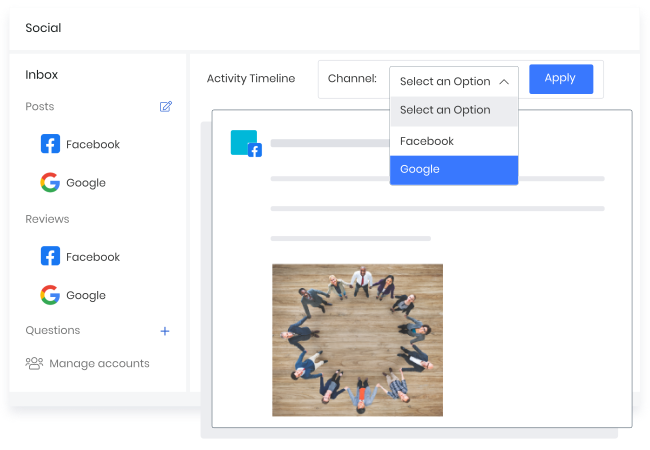
Monitor and interact with clients on social media channels such as Google My Business, Facebook, Twitter, and Instagram from within the CRM
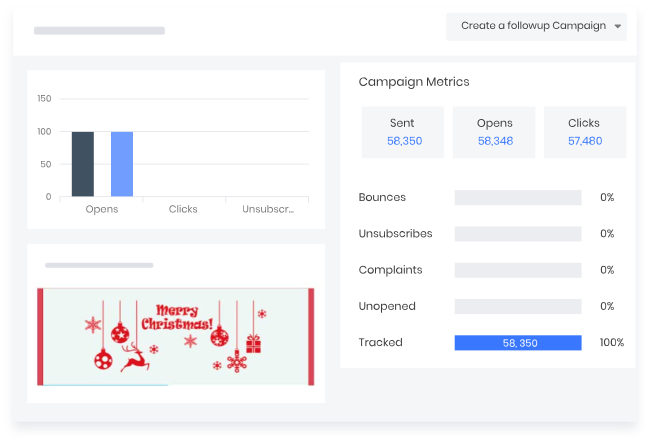
Use data from previous campaigns to boost response rates. Plan and perform ahead of time to keep your team organized.

Send out custom survey campaigns
“With Vtiger our sales manager, sales representatives, customers service and CEO have accurate and up to date information regardless of their location."

“We now have a better handle on the business and are poised for easier continued growth through further exploitation of the rich feature set. I can always trust that when we need it there’s great support on hand.”
"We are using Workflows to handle a lot of our post-sales activities. This saves reps valuable time, allowing them to focus on the more important tasks."
Marketing automation inside a CRM works by capturing intent across channels, structuring it into customer records, and acting on it through coordinated workflows. Instead of managing campaigns in isolation, Vtiger connects email, web, social, messaging, and analytics directly to the customer relationship, ensuring every action is contextual, measurable, and reusable.
Lead generation starts with structured data capture. CRM connected webforms are created using templates or custom layouts with drag and drop fields, including support for document uploads. Embedded forms convert website visitors directly into CRM records, handle duplicates intelligently, and assign leads automatically. This removes manual data entry and ensures high intent prospects are identified and routed early.
Audience segmentation is managed using marketing lists built inside the CRM. Filters use customer attributes, engagement history, and relationship context to group audiences accurately. Trigger based emails support onboarding, nurturing, re engagement, and retention. Prebuilt and customizable templates allow teams to personalize communication at scale without external tools.
Nurturing is handled through automated email sequences that respond to customer behavior. Engagement scores, open and click tracking, and link level analytics help refine timing and content. Historical campaign insights guide optimization, while consent controls and double opt in processes maintain data quality and compliance.
CRM based automation supports personalized and bulk messaging through integrated providers. SMS and messaging workflows run alongside email campaigns, using the same customer data. Templates support testing, while engagement metrics help improve relevance and response rates across devices.
Landing pages are built using drag and drop editors with mobile optimized templates. Pages integrate CTAs, webforms, surveys, and appointment scheduling. Visitor activity, views, and conversions are tracked automatically, enabling continuous improvement based on real interaction data.
Survey campaigns are created and distributed from within the CRM. Responses are linked to customer records, allowing teams to measure satisfaction, identify issues, and trigger follow up actions. This supports retention, service improvement, and relationship continuity.
Social media activity is monitored through unified timelines that track posts, comments, reviews, and mentions. Teams can schedule posts, respond directly, manage FAQs, and convert social interactions into CRM records using rules and keywords. Trend and competitor monitoring provide additional context for engagement planning.
All marketing activity feeds into real time analytics dashboards. Engagement data, conversion tracking, and past campaign performance inform future planning. Short links with lifetime tracking, device level analytics, and UTM parameters provide clear visibility into what drives responses and outcomes.
What does marketing automation bring to your business?
Marketing automation with Vtiger CRM focuses on removing manual effort from how demand is generated, qualified, and converted. By running email campaigns, webforms, landing pages, messaging, and social engagement directly inside the CRM, teams can plan and execute marketing activity from a single system without repeatedly triggering individual actions.
Because marketing automation is connected to customer records, pipelines, and reports, businesses gain clearer visibility into what works and what does not. Leads reach sales teams with context, engagement history, and intent already captured. This improves conversion quality while allowing marketing and sales teams to operate with better coordination and less operational friction.
Marketing automation delivers the most value when it is built into the CRM rather than operating as a separate system. This setup allows businesses to manage demand generation, qualification, engagement, and measurement using the same data that sales and service teams rely on. The result is better coordination, clearer accountability, and more consistent execution.
Marketing automation in CRM helps businesses assess lead interest based on actual engagement. Actions such as email opens, link clicks, form submissions, and page visits contribute to lead evaluation. This allows sales teams to focus on leads that show readiness while others continue to receive automated nurturing. Lead quality improves without increasing manual review.
CRM-based email marketing allows teams to create, schedule, and trigger emails using predefined conditions. Communication adjusts based on customer behavior and lifecycle stage. Performance metrics such as delivery, engagement, and response are tracked centrally. This enables continuous improvement without relying on separate email tools or manual reporting.
Marketing automation consolidates engagement across email, web, messaging, and social channels. All interactions are recorded against customer records. This provides a complete view of engagement history and reduces the risk of inconsistent communication across channels.
CRM-based automation supports segmentation using behavioral data, profile attributes, location, and engagement history. Campaigns can be planned for specific groups instead of broad audiences. This increases relevance and reduces unnecessary communication.
Marketing automation supports communication before and after conversion. Customers receive structured onboarding, feedback requests, expansion campaigns, and re-engagement messages based on CRM data. This maintains continuity across stages and supports retention and long-term account growth.

Award winning customer service centered around enabling you to succeed
Customizable at the click of a button to adapt to your people and process
Designed to help your teams spend more time with customers and less on entering data