Selecting a CRM for a law firm requires more than just comparing features. It involves understanding your firm’s workflow, client management requirements, and regulatory responsibilities. The right system should streamline legal processes, maintain compliance, and support both client service and internal collaboration.
Assess Your Firm’s Scale and Specific Needs
The size and structure of your practice largely determine the type of CRM you need. Solo practitioners and small firms benefit from straightforward platforms that focus on core client tracking, lead management, and task reminders without unnecessary complexity. Mid-sized or enterprise firms with multiple offices require systems capable of handling complex workflows, document management, billing, and cross-departmental collaboration . Evaluating current caseloads, growth projections, and operational complexity helps avoid investing in a system that is either underpowered or unnecessarily complicated.
Determine Your Priority Features
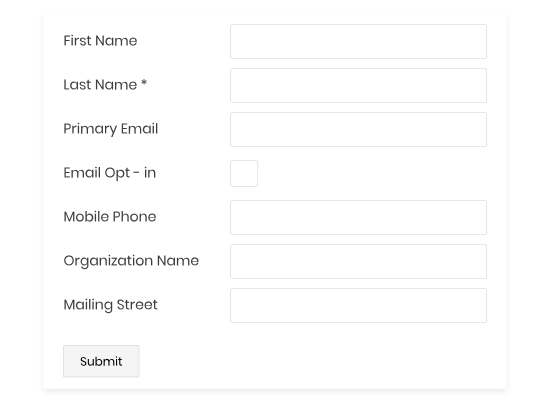
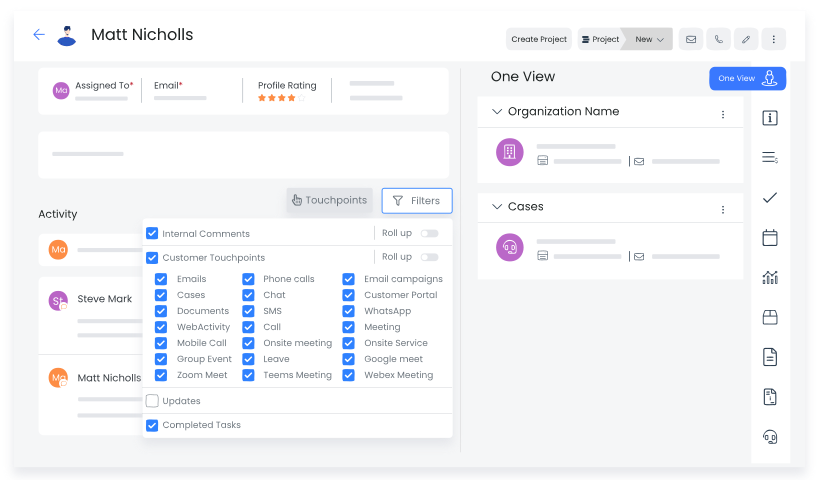
Legal CRMs vary in functionality depending on whether the firm prioritizes client acquisition, case management, or both. For firms focused on marketing and lead generation, features like automated email campaigns, online inquiry forms, and lead scoring are essential to attract and track potential clients. For firms prioritizing case management, robust tools for time tracking, billing, document management, court deadlines, and client communication are crucial.
Evaluate Integrations and Security
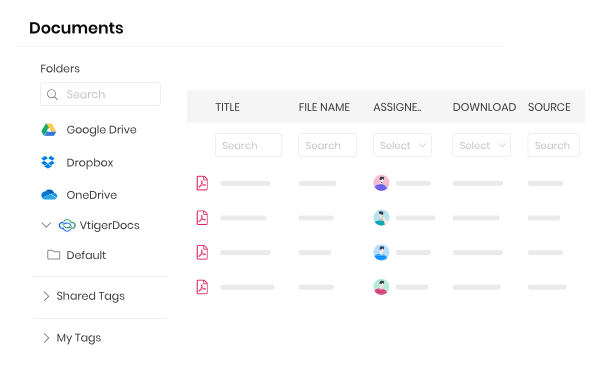
A CRM must integrate seamlessly with your firm’s existing technology stack. Email, calendar applications, document management systems, and accounting software should synchronize to avoid duplicate entries and maintain efficiency. Security is paramount due to the confidential nature of client information. The platform should include strong data encryption, access controls, audit trails, and compliance with privacy regulations or local bar requirements, ensuring client data is protected at every stage.
Explore User Experience and Adoption
Even the most feature-rich CRM fails if staff cannot or will not use it. Law firm workflows are often complex, so the interface must be intuitive and accommodate multiple user roles. Free trials or demos allow lawyers and support staff to assess usability. Prioritizing ease of use and adopting a platform that fits naturally into daily routines ensures consistent data entry, accurate reporting, and maximum return on investment.